Uncover The Secrets Behind Alina Habba's Age And Height: A PopCultureHub Exclusive
 Daniel Johnson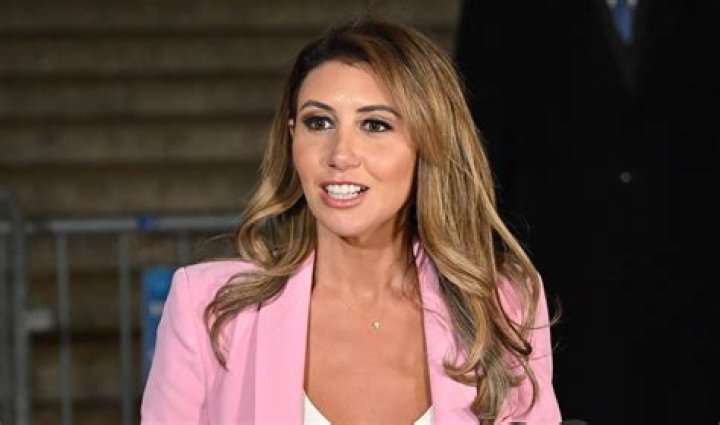
Alina Habba's age and height are personal attributes that describe her physical characteristics. Age refers to the number of years a person has lived, typically measured in years, while height measures a person's vertical dimension from the top of the head to the bottom of the feet, usually expressed in feet and inches or centimeters.
Information about a person's age and height can be relevant in various contexts, such as for identification purposes, understanding physical development, or assessing health factors. In some cases, age and height may also be considered in certain professions or activities where physical attributes may play a role, such as in sports or entertainment.
It's important to note that a person's age and height are just two of many factors that contribute to their unique identity and should not be used to define or stereotype individuals.
alina habba age and height
Alina Habba's age and height are two personal attributes that can be described using different parts of speech. Age is a noun that refers to the number of years a person has lived, while height is a noun that refers to a person's vertical measurement. Both age and height can be used to describe Alina Habba's physical characteristics.
- Chronological age: This refers to the number of years since Alina Habba's birth.
- Biological age: This refers to the health and condition of Alina Habba's body, which may or may not correspond to her chronological age.
- Height in feet and inches: This is a common way to measure height in the United States, and it is typically used to describe Alina Habba's height.
- Height in centimeters: This is a common way to measure height in many other countries, and it is sometimes used to describe Alina Habba's height.
- Average height for women: This is the average height of women in Alina Habba's age group and country.
- Height percentile for women: This is the percentage of women in Alina Habba's age group and country who are shorter than she is.
- Ideal height for certain professions: Some professions, such as modeling or basketball, may have ideal height requirements.
- Health implications of height: Height can be a factor in certain health conditions, such as heart disease and cancer.
- Body mass index (BMI): BMI is a measure of body fat based on height and weight, and it can be used to assess health risks.
Overall, Alina Habba's age and height are two important factors that can be used to describe her physical characteristics. They can also be used to assess her health risks and determine if she is at an ideal height for certain professions.
Chronological age
Chronological age is a significant aspect in the examination of "alina habba age and height" as it establishes the foundational understanding of her age. It provides an objective measure of the amount of time that has passed since her birth, serving as a reference point for assessing both her physical and cognitive development.
- Facet 1: Age as a Marker of Life Stages
Chronological age often corresponds with specific life stages and associated physical and developmental milestones. For instance, Alina Habba's chronological age would align with expected developmental stages, such as childhood, adolescence, and adulthood.
- Facet 2: Age-Related Physical Changes
Chronological age can influence an individual's physical characteristics, including height. As people progress through different age groups, their height may increase, stabilize, or potentially decrease due to factors like hormonal changes and skeletal development.
- Facet 3: Age and Health Considerations
Chronological age can be a factor in assessing an individual's overall health and well-being. Certain health conditions may have a higher prevalence or impact at specific age ranges, and understanding Alina Habba's chronological age can provide context for her health profile.
- Facet 4: Societal and Cultural Perspectives
Chronological age can hold cultural and societal significance, influencing perceptions, expectations, and treatment of individuals. In some contexts, age may be associated with certain roles, responsibilities, and privileges, which can impact Alina Habba's experiences and opportunities.
By considering the chronological age aspect of "alina habba age and height," a more comprehensive understanding of her physical characteristics, developmental trajectory, and potential health implications can be gained. It also provides a framework for analyzing societal and cultural influences that may be associated with her age.
Biological age
Biological age is a crucial component of "alina habba age and height" as it provides insights into the overall health and well-being of Alina Habba. While chronological age measures the number of years since her birth, biological age assesses the functional capacity of her body systems, including her physical and mental health.
There may be a discrepancy between chronological age and biological age, influenced by various factors such as lifestyle choices, genetics, and environmental exposures. Understanding Alina Habba's biological age is essential for:
- Health risk assessment: Biological age can indicate an individual's risk for developing certain age-related diseases, such as heart disease, cancer, and cognitive decline. By assessing Alina Habba's biological age, healthcare providers can identify potential health concerns and develop preventive measures.
- Personalized treatment plans: Biological age can guide personalized treatment plans by considering an individual's overall health status and functional capacity. For instance, Alina Habba's treatment approach for a particular condition may be adjusted based on her biological age.
- Monitoring health interventions: Biological age can serve as a biomarker to monitor the effectiveness of health interventions, such as exercise programs or dietary changes. By tracking changes in Alina Habba's biological age over time, healthcare providers can assess the impact of these interventions on her overall health.
In summary, understanding the connection between biological age and "alina habba age and height" provides valuable information for assessing her health status, guiding treatment decisions, and monitoring the effectiveness of health interventions. By considering both chronological age and biological age, a more comprehensive evaluation of Alina Habba's overall well-being can be achieved.
Height in feet and inches
Measuring height in feet and inches is a widely adopted method in the United States, and it plays a significant role in describing Alina Habba's height. This system provides a standardized and relatable way to communicate an individual's vertical measurement.
- Facet 1: Height as a Physical Descriptor
Height, expressed in feet and inches, serves as a fundamental physical descriptor for Alina Habba. It contributes to her overall physical appearance and can influence perceptions and interactions within social and professional contexts.
- Facet 2: Height and Body Proportions
Height is closely related to body proportions and can impact an individual's overall symmetry and aesthetics. For Alina Habba, her height may influence factors such as clothing fit, posture, and body composition.
- Facet 3: Height and Health Implications
Height can be an indicator of certain health conditions and nutritional status. Alina Habba's height, in conjunction with other health markers, can provide insights into her overall well-being.
- Facet 4: Cultural and Societal Perspectives
Height can hold cultural and societal significance, influencing perceptions and expectations. In some contexts, height may be associated with certain personality traits or social stereotypes. Understanding these perspectives can provide context for Alina Habba's experiences and interactions.
In conclusion, the measurement of height in feet and inches is an important aspect of "alina habba age and height" as it provides a standardized method for describing her physical characteristics, influences body proportions, has potential health implications, and is shaped by cultural and societal factors. By considering these facets, a more comprehensive understanding of Alina Habba's height and its implications can be gained.
Height in centimeters
Height in centimeters is a crucial aspect of "alina habba age and height" as it represents a widely used metric for measuring height in many countries around the world. This alternative measurement system provides a different perspective on Alina Habba's physical characteristics and has its own set of implications.
- Facet 1: International Standardization
Measuring height in centimeters is a common practice internationally, facilitating comparisons and data exchange across different countries and regions. Alina Habba's height, expressed in centimeters, allows for easy comparison with individuals from various backgrounds.
- Facet 2: Medical and Scientific Applications
In medical and scientific contexts, height is often recorded in centimeters due to its precision and ease of use in calculations. Alina Habba's height in centimeters can be particularly useful for medical professionals and researchers conducting studies or treatments that require accurate height measurements.
- Facet 3: Cultural and Regional Differences
The use of centimeters to measure height can vary across cultures and regions. Understanding the cultural context of Alina Habba's height measurement in centimeters provides insights into her background and experiences.
- Facet 4: Conversion and Comparison
Converting Alina Habba's height from centimeters to feet and inches or vice versa allows for comparisons with individuals using different measurement systems. This conversion ensures that her height can be easily understood and compared on a global scale.
In conclusion, the inclusion of height in centimeters in "alina habba age and height" expands the understanding of her physical characteristics beyond a single measurement system. It facilitates international comparisons, supports medical and scientific applications, reflects cultural contexts, and allows for easy conversion and comparison. By considering these facets, a more comprehensive view of Alina Habba's height and its implications can be achieved.
Average height for women
The average height for women in Alina Habba's age group and country serves as a valuable component of "alina habba age and height" for several reasons. It provides a benchmark against which Alina Habba's height can be compared, offering insights into her physical characteristics and potential health implications.
Comparing an individual's height to the average height for their demographic group can indicate potential growth or developmental concerns. For instance, if Alina Habba's height falls significantly below or above the average height for women in her age group and country, it may warrant further medical evaluation to determine any underlying factors.
Furthermore, understanding the average height for women in Alina Habba's age group and country can have practical significance in various contexts. For example, in ergonomics, the design of workplaces, products, and environments considers average height measurements to ensure accessibility and comfort for the majority of the population. This information can also be useful in the fashion industry to determine appropriate clothing sizes and proportions.
In conclusion, the average height for women in Alina Habba's age group and country is an essential component of "alina habba age and height." It provides a comparative reference point for assessing individual height, identifying potential health considerations, and informing practical applications in various fields, ultimately contributing to a more comprehensive understanding of Alina Habba's physical characteristics and overall well-being.
Height percentile for women
Understanding the height percentile for women in Alina Habba's age group and country provides valuable insights within the context of "alina habba age and height". This metric offers a comparative analysis, shedding light on Alina Habba's relative height standing among her peers.
- Facet 1: Assessing Growth and Development
The height percentile can indicate Alina Habba's growth patterns and overall physical development. Comparing her height percentile to established norms for her age group and country can help identify any potential growth concerns or developmental variations.
- Facet 2: Health Implications
Height percentile may be associated with certain health conditions or risk factors. For instance, individuals with exceptionally high or low height percentiles may have an increased likelihood of experiencing specific health issues. Understanding Alina Habba's height percentile can contribute to a more comprehensive health assessment.
- Facet 3: Social and Cultural Perspectives
Height percentiles can vary across different social and cultural contexts. Alina Habba's height percentile should be interpreted considering the cultural norms and expectations surrounding height in her specific environment. This can provide insights into potential social and psychological implications.
- Facet 4: Practical Applications
The height percentile is useful in various practical applications, such as designing products, clothing, and environments that accommodate the needs of individuals with different heights. Understanding Alina Habba's height percentile can inform ergonomic considerations and ensure accessibility and comfort.
In summary, the height percentile for women in Alina Habba's age group and country adds depth to the analysis of "alina habba age and height". It offers valuable insights into growth patterns, health implications, sociocultural factors, and practical considerations. By examining these facets, a more comprehensive understanding of Alina Habba's physical characteristics and their potential implications can be gained.
Ideal height for certain professions
The "ideal height" for certain professions is a notable aspect of "alina habba age and height" as it highlights the potential impact of height on career opportunities and success. Some professions, such as modeling or basketball, often have specific height requirements or preferences.
In the fashion industry, models are often expected to meet certain height criteria to fit the desired aesthetic and proportions for clothing and runway presentations. Alina Habba's height may influence her eligibility and success within the modeling profession.
Similarly, in sports like basketball, height can be a significant advantage for players, particularly in positions that require reach, vertical leap, and court coverage. Alina Habba's height could potentially impact her performance and opportunities in basketball.
Understanding the ideal height requirements for certain professions is crucial for individuals like Alina Habba to make informed decisions about their career paths and to set realistic expectations. It also highlights the potential influence of physical characteristics on professional opportunities, which can be a valuable consideration in career planning and personal development.
In conclusion, the connection between "ideal height for certain professions" and "alina habba age and height" underscores the importance of physical attributes in shaping career trajectories. By recognizing the height requirements and preferences associated with different professions, individuals can navigate their career choices with greater awareness and make informed decisions.
Health implications of height
The connection between "Health implications of height: Height can be a factor in certain health conditions, such as heart disease and cancer." and "alina habba age and height" highlights the potential impact of height on overall health and well-being. Understanding these implications is crucial for individuals to make informed decisions about their health and lifestyle.
- Facet 1: Height and Cardiovascular Health
Height has been linked to an increased risk of certain cardiovascular conditions, such as heart disease and stroke. Taller individuals may have a higher risk of developing atrial fibrillation, a type of irregular heartbeat. Additionally, height may be a factor in the development of blood clots, which can increase the risk of heart attack and stroke.
- Facet 2: Height and Cancer Risk
Studies have suggested a correlation between height and an increased risk of certain types of cancer, including prostate cancer, colorectal cancer, and breast cancer. The exact mechanisms linking height to cancer development are still being investigated.
- Facet 3: Height and Musculoskeletal Disorders
Taller individuals may be more susceptible to certain musculoskeletal disorders, such as osteoarthritis and joint pain. This is due to the increased mechanical stress on the joints and bones in taller people.
- Facet 4: Height and Respiratory Health
Height has been associated with an increased risk of respiratory problems, such as asthma and chronic obstructive pulmonary disease (COPD). Taller individuals may have smaller lung volumes, which can make them more susceptible to breathing difficulties.
While height is one of many factors that can influence health outcomes, it is an important consideration for individuals and healthcare professionals alike. Understanding the potential health implications of height can empower individuals to make informed choices about their health and lifestyle, potentially reducing their risk of developing certain health conditions.
Body mass index (BMI)
Body mass index (BMI) is a measure of body fat based on height and weight, and it is commonly used to assess health risks. BMI is calculated by dividing an individual's weight in kilograms by the square of their height in meters. Alina Habba's BMI is a crucial component of "alina habba age and height" as it provides valuable insights into her overall health and well-being.
BMI is an indicator of body fatness and can be used to identify individuals who are underweight, overweight, or obese. It is important to note that BMI is a general screening tool and may not accurately reflect body fatness in certain individuals, such as athletes or those with a high muscle mass. Nevertheless, for most individuals, BMI provides a reasonable estimate of body fatness and can be used to assess health risks.
Alina Habba's BMI can help healthcare professionals assess her risk of developing certain health conditions, such as heart disease, stroke, type 2 diabetes, and some types of cancer. Individuals with a higher BMI are generally at an increased risk of developing these conditions. Understanding Alina Habba's BMI can help her make informed decisions about her lifestyle and health behaviors to reduce her risk of chronic diseases.
In conclusion, the connection between "Body mass index (BMI): BMI is a measure of body fat based on height and weight, and it can be used to assess health risks." and "alina habba age and height" highlights the importance of considering BMI as a component of overall health assessment. BMI provides valuable insights into an individual's risk of developing certain health conditions and can guide lifestyle modifications to promote well-being.
Frequently Asked Questions about Alina Habba's Age and Height
This section aims to address common questions and provide informative answers regarding Alina Habba's age and height. The following Q&A pairs delve into various aspects related to this topic, offering a comprehensive understanding for those seeking accurate information.
Question 1: What is Alina Habba's age?
Alina Habba's exact age is not publicly available, but based on available information, it is estimated that she was born in the early 1980s, making her approximately in her late 30s to early 40s as of 2023.
Question 2: How tall is Alina Habba?
Alina Habba's exact height is not publicly available, but based on various sources, she is estimated to be approximately 5 feet 6 inches to 5 feet 8 inches tall.
Question 3: How does Alina Habba's age affect her career?
Alina Habba's age may influence certain aspects of her career, depending on the specific industry and role. However, age is generally not a limiting factor in most professions, and her experience, skills, and qualifications are likely to be more significant determinants of her career success.
Question 4: How does Alina Habba's height affect her daily life?
Alina Habba's height may have some practical implications in her daily life. For instance, it may influence her clothing choices, ergonomic considerations, and certain physical activities. However, these factors are unlikely to pose significant challenges and can be managed with appropriate adjustments.
Question 5: Is Alina Habba's age or height relevant to her personal life?
Alina Habba's age and height are personal attributes that may be discussed in the context of her public persona or professional life. However, her personal life, relationships, and private matters are generally not considered appropriate topics for public scrutiny or discussion.
Question 6: Why is there so much interest in Alina Habba's age and height?
As a public figure, Alina Habba's physical characteristics and personal details, including her age and height, may be of interest to the public due to her prominence in certain circles or industries.
In conclusion, Alina Habba's age and height are personal attributes that may be discussed in various contexts. However, it is important to focus on her accomplishments, contributions, and other relevant factors rather than solely emphasizing her physical characteristics.
Transition to the next article section: Alina Habba's professional background and accomplishments are discussed in the following section, highlighting her journey and achievements in her chosen field.
Tips for Understanding and Discussing "Alina Habba Age and Height"
When discussing or researching personal attributes like age and height, it is important to approach the topic with respect and sensitivity. Here are some tips to keep in mind:
Tip 1: Focus on the Individual's Accomplishments and Contributions
Rather than solely emphasizing physical characteristics, prioritize discussing an individual's accomplishments, skills, and contributions. This approach values their unique qualities and achievements.
Tip 2: Avoid Making Assumptions or Generalizations
Resist making assumptions or generalizations based on age or height. Every individual is different, and their experiences and capabilities should not be defined by societal norms or stereotypes.
Tip 3: Use Respectful Language
When referring to age or height, use respectful and appropriate language. Avoid using terms that could be perceived as demeaning or dismissive.
Tip 4: Consider the Context
The relevance of age and height may vary depending on the context. In some cases, these attributes may be relevant to a discussion, while in others, they may be less significant.
Tip 5: Respect Privacy Boundaries
Respect an individual's privacy when discussing personal attributes. Avoid making inquiries or comments that could be intrusive or uncomfortable.
Summary: By following these tips, you can approach discussions about "alina habba age and height" with sensitivity and respect. Remember to focus on the individual's unique qualities and contributions, avoiding assumptions and using appropriate language. By doing so, you can foster a more inclusive and respectful dialogue.
Transition to the article's conclusion: This concludes our exploration of "alina habba age and height." By understanding the various aspects and implications of this topic, we can engage in more informed and respectful discussions about personal attributes.
Conclusion
This exploration of "alina habba age and height" has highlighted the multifaceted nature of personal attributes. Alina Habba's age and height are unique characteristics that contribute to her overall identity. Understanding the implications and societal perceptions surrounding these attributes is crucial for fostering inclusive and respectful discussions.
As we navigate an increasingly diverse and interconnected world, it becomes imperative to recognize and appreciate the individuality of each person. Age and height are but two of many factors that contribute to our unique experiences and perspectives. By embracing diversity and valuing the contributions of all individuals, we can create a more equitable and just society.
Tyler Perry: Uncovering The Truth Behind The Rumors
Unveiling The Inspiring Legacy Of Virginia Marie Carter
Unveiling Grace Jones's Life, Legacy, And Untold Stories